

The Free Quick Take
The Free is Gossamer Gear’s first-ever freestanding tent, and it’s built for the backpacker who wants dome-tent convenience without giving up the ounce-counting habits they picked up from trekking-pole shelters. Its standout strength is simple: a genuinely stake-free pitch at a trail weight (29.8 oz / 845 g) that undercuts almost every other freestanding double-wall tent on the market. The main tradeoff is space. At roughly 16.5 square feet with a tapered 21.5-inch foot end, this is a tent for people who prioritize weight and setup speed over stretch-out room.
Pros:
- True freestanding pitch, no stakes needed to get the tent standing
- Trail weight under 2 lbs for a full double-wall design
- $400 price undercuts most freestanding competitors
- Simple, fast setup with color-coded, snap-together hardware
Cons:
- Tapered floor is snug at the foot, especially for side sleepers or wide pads
- Brand new for 2026, so there’s no long-term durability track record yet
- 1200mm SIL/PU coating is on the lighter end for storm-heavy climates
- Currently listed as sold out on Gossamer Gear’s own site as of this writing
One-line summary: $400, 29.8 oz (845 g) trail weight, 1-person capacity.

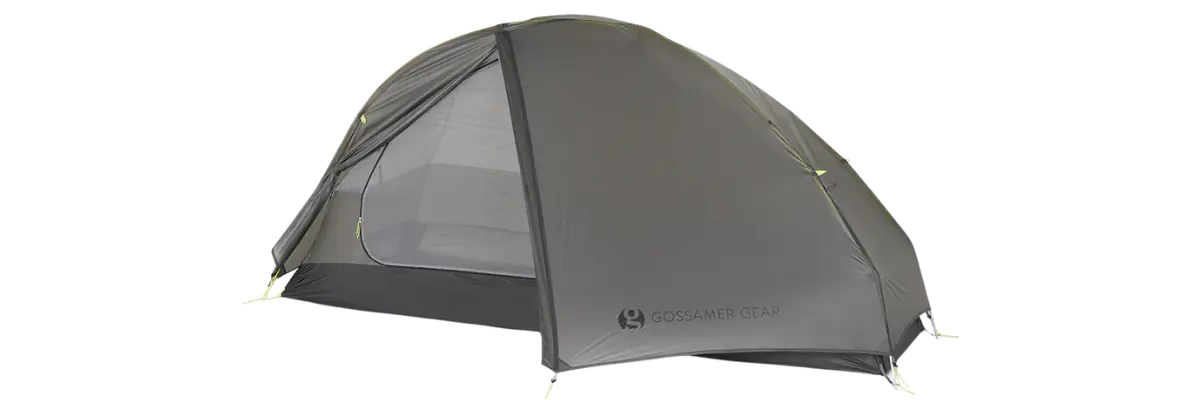
Specs at a Glance: The Free
| Spec | Detail |
|---|---|
| Price (USD) | $400 |
| Trail Weight | 29.8 oz / 845 g (fly, body, poles) |
| Packed Weight | 33.02 oz / 935.8 g (adds stakes, stuff sack, pole bag) |
| Capacity | 1 person |
| Floor Dimensions | 86 in length x 34 in head width x 21.5 in foot width (218.4 cm x 86.4 cm x 54.6 cm) |
| Peak Height | 39 in / 99.1 cm |
| Packed Size | 17 in H x 5 in W x 5 in D (43.2 cm x 12.7 cm x 12.7 cm) |
| Shelter Type | Freestanding, double-wall dome tent |
| Shelter Material | ClearSkies 15D recycled Robic nylon with 20D dope-dyed ripstop grid, SIL/PU coating (1200 mm), 4,923 mm hydrostatic head |
| Canopy Weight (oz/sqyd) | Not specified |
| Floor Weight (oz/sqyd) | Not specified |
| Number of Doors | 1 |
| Number of Vestibules | 1 |
| Wall Construction | Not specified (bathtub floor not explicitly detailed by manufacturer) |
| Season Rating | Not specified by Gossamer Gear (marketed and generally reviewed as a 3-season shelter) |
| Trekking Poles Required | No, freestanding with included DAC aluminum pole set |
| Warranty | Not specified (Gossamer Gear offers a general product warranty; exact terms weren’t listed on the product page) |
| Lead Time | Not specified; listed as sold out with a “notify me” waitlist at time of writing |
Gossamer Gear The Free Design and Build Quality
Gossamer Gear built The Free around its new ClearSkies fabric, and the numbers back up the marketing. The 15D recycled Robic nylon gets a 20D dope-dyed ripstop grid and a 1200mm silicone/polyurethane coating, landing at 4,923mm of hydrostatic head. That’s meaningfully higher than a lot of ultralight silnylon flies, and Gossamer Gear says it’s over twice the water resistance of the fabric used on the previous generation of The One and The Two.
The pole architecture is where the “freestanding at trekking-pole weight” trick happens. DAC NFL 8.7mm aluminum poles cross in an X pattern and meet at a center swivel connector, with color-coded webbing and snap attachments at each corner so there’s little guesswork in the dark. Seams come factory taped, the two doors (fly and body) use YKK #3 coil zippers, and the fly zipper sits under a fabric flap to keep water out of the coil.
You do pay a small premium here relative to trekking-pole shelters, and that premium buys you the pole set itself, the taped seams, and a fabric that’s been engineered specifically for this product rather than pulled off a generic roll. Six aluminum stakes, four guylines, and a pole repair section round out the kit, which is a fair amount of included hardware for $400. Whether that premium is worth it against non-freestanding tents comes down to how much you value not needing a taut pitch to get the tent up.
Setup and Pitch of the The Free
The Free measures 86 inches long, 34 inches wide at the head, and tapers to 21.5 inches at the foot, with a 39-inch peak height. Floor area comes in at 16.5 square feet, which is on the tighter end for a solo freestanding tent in this weight class. Gossamer Gear itself recommends a max user height around 6’2″, noting taller campers on an inflated pad will likely brush the ceiling with their head.
Peak height gives you real sit-up room in the center of the tent, which matters more than raw square footage for most solo campers. The taper is where you’ll notice the compromise: Gossamer Gear’s own FAQ says a standard 25-inch-wide pad technically doesn’t fit without pushing the side walls out, and recommends a tapered pad for the best fit. Side sleepers who like to sprawl, or anyone used to a rectangular 20-inch pad with extra margin, will feel the narrowing at the foot end more than back sleepers will.
There’s a single door and single vestibule, described as offering good coverage with double tie-back points, plus two interior mesh pockets for small gear. This is unambiguously a solo shelter. Two-person use isn’t realistic given the floor width, and Gossamer Gear doesn’t market it that way.
Weather Performance of the Gossamer Gear The Free
This is the section where The Free earns its name. Because the poles clip directly to the tent body and the whole structure is self-supporting, you can pitch it, pick it up, and move it to a better spot without staking anything first. The center swivel connector and color-coded snap attachments are designed to make the correct pole orientation obvious, which should shorten the learning curve for people new to dome-style tents.
Stakes come into play only for the vestibule: Gossamer Gear’s own FAQ confirms stakes are needed to deploy the vestibule of the fly, and are recommended (not required) for added stability in wind. That’s a meaningful nuance. “Freestanding” here means the core structure of the tent, not the fully weatherproofed setup you’d want in exposed conditions.
Because ClearSkies is a silicone-coated nylon rather than a polyester like the fabrics used on some competitors, expect some stretch when wet, which is standard behavior for sil-treated nylon and something you’ll want to account for by retensioning guylines after a rain rolls through overnight. On uneven ground, the freestanding structure should behave better than a trekking-pole tent that depends on precise staking for a taut pitch, since you can reposition the whole tent rather than re-stake individual corners. As a brand-new product, independent, hands-on pitch-time comparisons against established competitors aren’t available yet.
Gossamer Gear The Free Value and Comparisons
On paper, The Free’s numbers are solid for its weight class. The 4,923mm hydrostatic head rating is well above what most three-season tents offer and, per Gossamer Gear, approaches the 5,000mm mark commonly associated with mountaineering-grade shelters. Factory-taped seams and double tie-back points on the fly are the two features Gossamer Gear points to for storm performance, along with the six included aluminum stakes for pinning down the vestibule and adding stability in wind.
What’s missing from the manufacturer’s materials is any independent wind rating in mph, or documented field testing in genuinely severe conditions. Early coverage of The Free has been limited to first-look and first-impressions pieces rather than multi-season field reports, so real-world storm performance is still an open question. Silicone-coated nylon fabrics like ClearSkies are known to sag somewhat when saturated, which is a normal characteristic of the material rather than a flaw specific to this tent, but it does mean you should expect to snug up guylines if you get hit with sustained rain overnight.
As a full double-wall design with a mesh body and separate rainfly, ventilation should be a strength relative to single-wall ultralight shelters, since airflow can move between the two layers and reduce condensation buildup on the inner tent. Gossamer Gear doesn’t publish specific vent details or condensation test data for The Free, so how it performs in humid, still conditions is another area where hands-on testing would add real value.
The Free Value and Comparisons
At $400, The Free lands in an interesting spot: cheaper than most name-brand freestanding ultralight tents, while offering a trail weight that competes with some non-freestanding designs.
Against the Durston X-Dome 1+ ($419, 35 oz / 985 g), The Free is both lighter and less expensive, but the X-Dome counters with a genuinely larger interior, a fly-first pitch option for wet-weather setup, and a vestibule that doesn’t require staking to use. If interior space and storm-day pitching flexibility matter more to you than shaving a few ounces, the X-Dome is the stronger buy. If minimizing pack weight is the priority and you’re comfortable with a snugger floor, The Free wins on the scale.
Against the Nemo Hornet Elite OSMO 1P ($599.95, 1 lb 7 oz / 657 g trail weight), the comparison flips. The Hornet Elite is lighter and comes from a large, established brand with a long testing history, but it isn’t freestanding in the same way, it costs $200 more, and its floor plan is similarly tight at the foot. Buyers who want the lightest possible double-wall shelter and don’t mind staking every corner will lean toward the Hornet Elite. Buyers who want to set up and strike camp without touching a stake will prefer The Free.
For the ultra-premium end, something like the Hyperlite Mountain Gear Crosspeak 1 (roughly $825, 29 oz / 822 g) shows what Dyneema composite fabric buys you: comparable weight to The Free at more than double the price, with the durability and near-zero water absorption DCF is known for. That’s a tent for buyers who’ve decided cost is not a limiting factor.
Choose The Free if you want a stake-free pitch, a sub-2-lb trail weight, and a $400 price point, and you’re willing to accept a tapered, cozy floor plan in exchange. Look elsewhere if you need more interior volume for gear storage, want a fly-first pitch option for rainy setup, or want the reassurance of years of field-tested durability data before you buy.
The Free by Gossamer Gear FAQ
Does the Gossamer Gear Free tent need stakes to set up?
No. The main structure is truly freestanding and will stand on its own with no stakes. Stakes are only needed to pitch out the vestibule, and they’re recommended, not required, for extra stability in wind.
How much does The Free weigh?
Trail weight (fly, body, and poles) is 29.8 oz / 845 g. Total packed weight, including stakes, guylines, stuff sack, and pole bag, is 33.02 oz / 935.8 g.
Is The Free good in rain and wind?
The fabric carries a 4,923mm hydrostatic head rating with factory-taped seams, which is strong for this weight class on paper. Independent, multi-season storm testing isn’t yet available since the tent just launched in 2026.
Will a wide sleeping pad fit in The Free?
A standard 25-inch pad technically doesn’t match the floor’s taper and will push against the side walls. Gossamer Gear recommends a tapered pad for the best fit.
Is The Free easy to set up for a beginner?
Yes, according to Gossamer Gear’s own materials. Color-coded corners, a center swivel pole connector, and snap attachments are designed to make the correct setup obvious without much trial and error.
What season is The Free rated for?
Gossamer Gear doesn’t publish an explicit season rating for The Free. Based on its fabric and construction, it fits the typical three-season ultralight tent category rather than a four-season or winter-specific design.
How tall can you be and still fit comfortably in The Free?
Gossamer Gear recommends a max height around 6’2″ based on the 39-inch peak height and seated height. Campers 6’4″ and taller, especially on an inflated pad, will likely find their head touching the ceiling.