

X-Dome Pro 1+ Quick Take
The X-Dome Pro 1+ is for backpackers who want the convenience of a freestanding, double-wall tent without paying the usual two-pound weight tax for it. Its standout strength is simple: at 780 grams it is the lightest fully freestanding double-wall tent currently on the market, and it gets there without giving up the 23.5 square foot floor and 42 inch peak height that made the standard X-Dome 1+ so livable. The main tradeoff is cost and availability. This is an $849 tent made from Dyneema Composite Fabric, and Durston has struggled to keep it in stock since launch.
Pros:
- Genuinely class-leading weight for a freestanding, double-wall tent
- Massive interior volume and headroom for a solo shelter
- Fly-first pitch keeps the inner tent dry in rain
- Fully freestanding, including the vestibule, with zero mandatory stakes
Cons:
- $849 price puts it well above most ultralight competitors
- Frequently sold out, with long waits between production runs
- Larger footprint than a typical solo tent, which limits campsite options
- Full storm rating requires trekking poles and extra guylines you may not otherwise carry
In short: $849, 27.5 oz (780 g) trail weight, 1-person (1+) capacity, and it is currently the lightest freestanding double-wall tent you can buy.
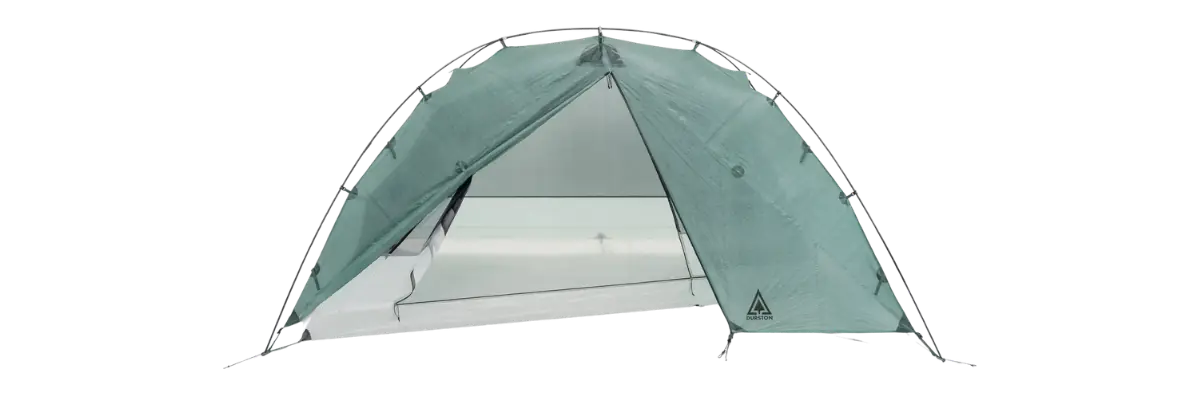
Specs at a Glance: X-Dome Pro 1+
| Spec | Details |
|---|---|
| Price (USD) | $849 |
| Trail Weight | 780 g / 27.5 oz (complete tent: fly, inner, poles) |
| Packed Weight | 825 g / 29.1 oz (typical setup: tent, stuff sacks, four 6″ stakes) |
| Capacity | 1+ (solo, with room for gear or a second person in a pinch) |
| Floor Dimensions | 85″ straight / 90″ diagonal length x 29–50″ width (216–229 cm x 74–127 cm) |
| Peak Height | 42″ / 108 cm (fly height 45″ / 115 cm) |
| Packed Size | 19″ x 4.5″ / 48 x 12 cm |
| Shelter Type | Freestanding, double-wall dome (X-Dome geometry) |
| Shelter Material | Dyneema Composite Fabric (fly and floor) |
| Canopy Weight | 0.55 oz/sqyd DCF |
| Floor Weight | 0.67 oz/sqyd DCF |
| Number of Doors | 1 |
| Number of Vestibules | 1 (9.2 sq ft) |
| Wall Construction | Double-wall, clip-in mesh or solid inner, external carbon pole frame |
| Season Rating | 3-season (Durston calls it “3+ season” with optional trekking pole reinforcement) |
| Trekking Poles Required | No, fully freestanding; optional for storm-mode reinforcement |
| Warranty | 2 years |
| Lead Time | Sold out at launch; Durston has stated a larger fall 2026 restock is planned |
Durston Gear X-Dome Pro 1+ Design and Build Quality
The X-Dome Pro 1+ takes the geometry of the standard X-Dome 1+ and rebuilds every material choice around weight savings. The fly uses 0.55 oz/sqyd Dyneema Composite Fabric and the floor uses a 0.67 oz/sqyd variant, both bonded rather than sewn. Bonded seams are more expensive to produce than traditional stitching, but they are stronger and fully waterproof without the extra bulk of taped seam tape, which is part of why this tent doesn’t feel as boxy in the stuff sack as older Dyneema shelters.
The pole set is where the price tag really shows itself. Durston moved to a second-generation Easton carbon pole with carbon inserts at the joints, replacing the metal-to-carbon connectors that caused reliability complaints on the original X-Dome. The main spine uses an 8.8mm diameter tube and the legs use 7.5mm tubing, and Durston claims two to three times the load capacity of a standard ultralight pole set at a fraction of the weight of aluminum. Zippers are premium YKK, with an AquaGuard-style water-resistant zipper on the fly and a lighter YKK #3 on the inner tent. You get up to 12 guyout points across the legs, crossbar, and hubs, plus dedicated pockets at the ends of the crossbar for angling in trekking poles as reinforcement. The floor is a true bathtub design, and the whole structure snaps together into a rigid, hub-connected frame rather than a collection of loose pole sections. For $849, you’re paying for materials and construction most tents in this weight class simply don’t use.
Setup and Pitch of the X-Dome Pro 1+
This is genuinely one of the more livable solo tents on the market, and it’s the reason people put up with the price. The floor runs 85 inches straight or 90 inches on the diagonal, and it widens from 29 inches at the foot to 50 inches at the head, so there’s real room to spread out gear beside your pad rather than stack everything at your feet. Peak height of 42 inches is 3 to 5 inches taller than most comparable one-person shelters, and because that height carries over more of the interior rather than tapering immediately, you can sit up comfortably almost anywhere inside rather than only dead center.
For tall sleepers, Durston recommends the tent for hikers up to about 6’2″ sleeping straight along the back wall, or up to 6’6″ sleeping on the diagonal along the door wall. Shoulder room is generous thanks to steep, near-vertical end walls, a detail that matters more than raw floor area for how cramped a tent actually feels at night. Side sleepers get more usable width here than in most 1P tents because the walls don’t collapse inward toward the floor the way a single-pole pyramid design does.
The 9.2 square foot vestibule sits beside the door rather than blocking it, so you can fully load it with a pack and wet gear and still climb in and out without disturbing anything. Two interior doors: A pocket near the head, a large one at the end. Two people could technically fit in a pinch, but this is a spacious solo tent, not a real 2P.
Weather Performance of the Durston Gear X-Dome Pro 1+
Setup is genuinely one of the easier parts of owning this tent, which is notable given how much technical fabric is involved. The pole set is fully interconnected, so there’s nothing loose to lose or assemble incorrectly, and the tent pitches fly-first by default. That means the fly and poles go up as a unit before the mesh inner is exposed to weather, which keeps rain out of the interior during setup. You can also leave the inner tent permanently clipped to the fly for a single “combined pitch,” which several reviewers have adopted simply because it’s faster and there’s little downside once you’ve decided you don’t need to run it fly-only for stargazing.
Because it’s 100% freestanding, including the vestibule, the X-Dome Pro pitches on surfaces where staked tents struggle: slickrock, tent platforms, packed sand, even frozen ground. That said, Dyneema is a non-stretch fabric, and this matters directly for pitch tautness. Unlike silnylon, which sags after it absorbs moisture or stretches slightly overnight, a DCF fly holds its tension from the moment you clip it in and doesn’t need re-tightening later in a wet camp.
For beginners, this is an easy tent to learn. The rectangular fly shape and hub-connected poles remove most of the guesswork that trips people up on trekking-pole shelters. On uneven ground, the freestanding structure is more forgiving than a staked pyramid, since you’re not relying on stake placement to hold the shape. Stake count is minimal: four 6-inch stakes for a basic pitch, with room to add more for guylines in wind.
Durston Gear X-Dome Pro 1+ Value and Comparisons
Durston’s own testing puts the X-Dome Pro at winds exceeding 100 km/h (about 62 mph) when it’s fully guyed out with trekking pole supports added to the crossbar pockets. Without those supports, expect meaningfully lower limits, closer to what you’d get from a well-guyed 3-season tent in the 40 to 50 mph range. The trekking pole reinforcement isn’t a gimmick here. Angling the poles inward against the sidewalls, rather than straight up, is what actually adds the structural stiffness, and it uses gear most backpackers already carry rather than requiring dedicated tent poles.
Rain performance benefits directly from the Dyneema switch. The fabric doesn’t absorb water at all, so there’s no sagging fly overnight and no weight gain from a soaked tent in the morning. You can shake most of the water off before packing it away, which is a real advantage on multi-day trips with repeated wet starts. The low fly edge and overhanging doorway both help block wind-driven rain splatter and keep water from dripping in when the door is open.
Condensation is managed through dual adjustable peak vents, and the double-wall design means any moisture that does form collects on the fly rather than dripping directly onto you, which is the main advantage this design holds over single-wall competitors like the Hyperlite CrossPeak 1. The vents can be closed down in high wind, which is the right tradeoff, since airflow and storm resistance pull in opposite directions. The bathtub floor is high enough to handle standing water on most sites, though Durston is upfront that the 0.67 oz floor fabric is best used with some care on sharp or abrasive terrain.
X-Dome Pro 1+ Value and Comparisons
At $849, the X-Dome Pro 1+ sits at the very top of the solo ultralight tent market, and the closest comparisons make the tradeoffs clear.
The Hyperlite CrossPeak 1 ($825) is the most direct rival in terms of positioning: also a freestanding Dyneema solo tent, weighing 813 g. The difference is architecture. The CrossPeak is single-wall, which saves a small amount of weight but puts you in direct contact with condensation on cold, humid mornings. It also uses aluminum DAC poles rather than carbon, which some campers will actually prefer for field repairability and durability, even though it adds a bit of weight. If you camp mostly in dry alpine conditions and want a slightly more bombproof pole set, the CrossPeak is the stronger pick. If you camp in humid or rainy climates and want a barrier between you and condensation, the X-Dome Pro’s double-wall design wins.
The Durston X-Mid Pro 1 ($599, roughly 440 g) is the lighter, cheaper option from the same company, but it’s a different category of tent entirely. It’s trekking-pole supported rather than freestanding, and single-wall rather than double-wall. If your priority is the absolute lowest weight and you don’t mind pitching with poles and don’t need a freestanding structure for hard ground, the X-Mid Pro 1 is both lighter and $250 cheaper. The X-Dome Pro exists specifically for people who’ve decided the convenience of freestanding is worth the weight and cost premium.
The standard Durston X-Dome 1+ (roughly $370 to $400, about 2 to 2.4 lbs depending on configuration) shares the exact same interior geometry and floor plan as the Pro version, just in silpoly fabric on aluminum-and-carbon-hybrid poles. If you want this tent’s livability without the Dyneema price tag, and you don’t mind carrying roughly a pound more, the standard version is the far more sensible buy for most people.
Buyers who should choose the X-Dome Pro 1+ over these alternatives: ounce-counters who specifically want freestanding pitching flexibility, hikers in wet or humid climates who value the double-wall condensation barrier, and anyone who has already decided budget isn’t the deciding factor and simply wants the lightest capable option in this category.
X-Dome Pro 1+ by Durston Gear FAQ
Is the X-Dome Pro 1+ good in heavy rain? Yes. The fly-first pitch keeps the interior dry during setup, the Dyneema fabric doesn’t absorb water or sag when wet, and the low fly edge with overhanging doorway blocks splatter effectively. It handles sustained rain well for a 3-season shelter.
Can it handle strong wind? It’s rated by Durston for winds over 100 km/h (about 62 mph) when fully guyed with trekking pole supports added. Without those supports, treat it like a standard well-built 3-season tent rather than a mountaineering shelter.
Is it hard to set up? No. The interconnected pole set and rectangular fly design make it one of the more beginner-friendly freestanding tents to pitch, and the option to leave the inner tent permanently clipped in speeds things up further.
Is this a 4-season tent? Durston explicitly avoids that label. It’s a 3-season tent that can handle more than most 3-season shelters when fully reinforced, but it isn’t designed or marketed for serious winter mountaineering.
How much weight do you actually save going Pro instead of standard? About 300 to 320 grams (roughly 11 ounces), depending on which weigh-in you compare, for close to double the price.
Does it condensate a lot? Less than single-wall competitors, thanks to the double-wall design and dual peak vents, but any tightly sealed tent in humid conditions will still see some condensation on the fly interior.
Do I need a groundsheet? Durston says most people don’t need one on typical surfaces if they’re careful about site selection, though they note roughly half of buyers choose to use one anyway for peace of mind on rougher terrain.