

Lanshan 2 Pro Quick Take
The Lanshan 2 Pro is the tent most people point to when someone asks how to get into ultralight backpacking without spending a full paycheck on a shelter. It’s a two person, trekking pole tent that trades a little bit of weight for a genuinely roomy interior, two full size vestibules, and materials that have proven durable over hundreds of nights on trail. The tradeoff is real: this is one of the heavier single wall trekking pole tents on the market, and condensation is a known weak point in humid or cold conditions. If you’re chasing the lightest possible base weight, look elsewhere. If you want most of the ultralight experience at a fraction of the price, this tent earns its reputation.
Pros
- Exceptional value, often a third the price of comparable ultralight shelters
- Spacious floor area and tall peak height for a trekking pole tent
- Two doors and two vestibules, so neither person has to crawl over the other
- Materials and construction have held up well in long term, real world testing
Cons
- Heavier than most single wall trekking pole tents in its class
- Condensation builds up quickly in cold or humid conditions
- Does not come seam sealed out of the box
- Included stakes are low quality and worth upgrading
In short: around $155 to $197 depending on retailer and fabric option, roughly 2 lb 4 oz packaged, sleeps two.


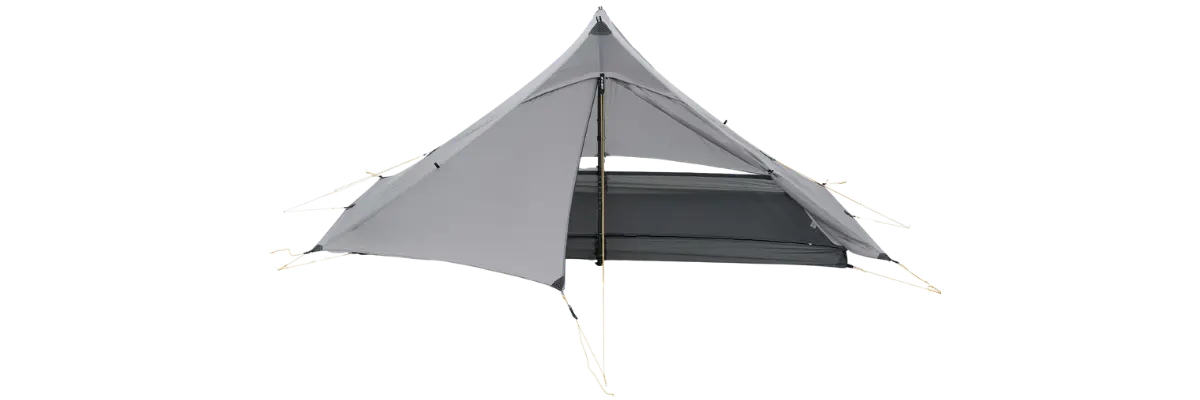
Specs at a Glance: Lanshan 2 Pro
| Spec | Detail |
|---|---|
| Price (USD) | Approximately $155–$197 depending on retailer, fabric (silnylon or silpoly), and door style |
| Trail Weight | Approximately 915–920 g (32.3 oz), tent body only, per manufacturer; independent testers measured 902–964 g (31.8–34.0 oz) |
| Packed Weight | Approximately 1,035–1,112 g (36.5–39.2 oz) including stakes, guylines, and stuff sacks |
| Capacity | 2 person |
| Floor Dimensions | Approximately 90.5–90.7 in x 47 in (230 cm x 120 cm) |
| Peak Height | Approximately 47–49.2 in (120–125 cm), varies with pitch and trekking pole extension |
| Packed Size | Approximately 13.5–14 in x 5.9–6.5 in (34 cm x 15 cm) |
| Shelter Type | Non freestanding, single wall trekking pole tent with sewn in inner |
| Shelter Material | 20D silnylon or silpoly fly (silpoly on some configurations), 15D–20D nylon inner walls, 20D PU coated nylon floor |
| Canopy Weight | Not specified in oz/sq yd (denier only: 20D) |
| Floor Weight | Not specified in oz/sq yd (denier only: 20D) |
| Number of Doors | 2 |
| Number of Vestibules | 2 |
| Wall Construction | Single wall, inner sewn to fly (not separable), semi freestanding structure via trekking poles and 6+ stakes |
| Season Rating | Marketed as 3–4 season, most reviewers recommend treating it as an extended 3 season shelter |
| Trekking Poles Required | Yes, 2 adjustable length poles |
| Warranty | Manufacturer warranty available through 3F UL Gear, specific terms and duration not published on the product page |
| Lead Time | Not specified, varies by retailer and shipping method |
3FULGEAR Lanshan 2 Pro Tent Design and Build Quality
The Lanshan 2 Pro uses a 20D silnylon (or silpoly, depending on configuration) rainfly, a 15D to 20D nylon inner wall, and a 20D PU coated nylon floor with a bathtub design that rises several inches off the ground. None of these fabrics are exotic by ultralight standards, but that’s part of the point. Heavier deniers and simpler coatings keep the price down while still holding up to real abuse.
Zippers are #3 YKK, a mid weight coil zipper that has proven reliable in long term testing, with an external storm flap covering each door zipper to keep wind driven rain out. The peak of the tent has a reinforced patch where the two trekking poles meet, along with an extra guyout loop for storm conditions. Four corner guyout points and additional side panel loops let you add extra tension or extra guylines when the forecast calls for it.
One detail matters more than it should: this tent does not come seam sealed. You’ll need to either pay a small fee for factory seam sealing at checkout or spend about an hour applying a silicone based sealant yourself before your first trip. This is common for silnylon tents, but it’s an extra step budget shoppers coming from big box tents may not expect.
The newest production version has also swapped some plastic vestibule hardware for titanium and introduced waterproof zippers, both worthwhile upgrades if you’re buying new.
Setup and Pitch of the Lanshan 2 Pro
This is where the Lanshan 2 Pro earns its reputation. The floor measures roughly 90.5 to 90.7 inches by 47 inches, giving you close to 30 square feet of interior space, which is generous for a two person trekking pole tent. Two 20 by 72 inch sleeping pads fit side by side without a fight for space.
Peak height runs up to about 49 inches through the center width of the tent, and that height is adjustable since it depends on how far you extend your trekking poles. Testers around 5’11” report being able to sit up comfortably without their heads brushing the ceiling, though the fabric does dip slightly toward the center. Shoulder room is good for two adults, and solo users have reported enough space inside to stretch out or do yoga on a rest day.
Each side has its own door and its own vestibule, so you won’t have to crawl over your tentmate to get outside at 2 a.m. Vestibule space is large enough to store a full pack out of the weather on each side. Interior storage is the one letdown: there’s a single small pocket at one end of the tent, and it’s not positioned near either door, which makes it easy to forget it’s there. Tall sleepers over 6 feet may find their feet brushing the tapered ends, so pitching with fully extended poles helps.
Weather Performance of the 3FULGEAR Lanshan 2 Pro Tent
Setup follows the standard trekking pole tent playbook: lay the tent flat, stake the four corners, insert two trekking poles into the peak sleeves near each door, then stake out the vestibules and tension the guylines. Experienced testers have pitched it solo in under six minutes on firm ground, and it doesn’t require a partner to get a clean pitch.
The learning curve is mild. Beginners coming from freestanding tents will need a session or two to understand how tension distributes across the four corners and two vestibules, but nothing here is unusual for the category. Adjustable tensioners at the main stakeout points hold their setting well once dialed in.
One thing to plan for directly: silnylon and PU coated nylon both stretch when wet, so a pitch that’s taut at 8 p.m. can sag by midnight in the rain. Expect to step out and retighten guylines if you get rained on overnight. Rocky or sandy ground where stakes don’t bite well will slow setup considerably, since the tent relies entirely on stakes and pole tension rather than a freestanding pole structure. Six stakes handle a basic pitch, with additional guyout points available for wind.
3FULGEAR Lanshan 2 Pro Tent Value and Comparisons
The silnylon fly sheds rain well and rides low to the ground, which limits splashback and wind driven spray getting underneath. The bathtub floor rises roughly four or more inches, which keeps ground moisture and light pooling water out in most conditions. That said, testers who pitched on flat ground during sustained heavy rain have reported water pooling underneath and seeping up through the floor seams, a reminder that campsite selection matters more with this tent than with a fully bathtub sealed, freestanding design.
Condensation is the tent’s most consistently reported weakness. As a single wall design, some condensation is expected, but multiple independent reviewers describe it as more pronounced than average, especially in cold, humid environments. Vents near the peak and at the head and foot ends help, but only when the tent is pitched with those vents properly exposed to airflow. In cold, high altitude conditions, condensation has been reported freezing to the interior walls overnight.
Wind performance is respectable when the pitch is tight: reviewers report the tent holding up in blustery conditions with a well tensioned setup, though a loose pitch has reportedly collapsed in strong gusts. Manufacturer wind speed ratings in mph were not published, so treat wind resistance claims as pitch dependent rather than a guaranteed number. Storm mode essentially means closing both doors, cinching the storm flaps over the zippers, and adding the extra guyout points at the peak and sides.
Lanshan 2 Pro Value and Comparisons
Against the Durston X-Mid 2 ($319 and up), the Lanshan gives up a genuine upgrade in exchange for roughly half the price. The X-Mid weighs slightly less, uses seam taped 15D silpoly, and its double wall, full mesh door design manages condensation far better. It also edges out the Lanshan on floor area by a few square feet. If condensation control and refined details matter more to you than saving money, the X-Mid is the better tent. If budget is the deciding factor, the Lanshan gets you into a similar category of shelter for a fraction of the cost.
Against the Six Moon Designs Haven (roughly $375), the Lanshan again wins clearly on price while giving up some weather performance. The Haven’s double wall construction largely solves the condensation problem that dogs the Lanshan, and its floor uses a thicker denier fabric, but it’s heavier, has a lower peak height, and a smaller footprint overall. Unless condensation is a dealbreaker for your trips, the Lanshan’s interior space and price make it the more practical pick for most budget conscious buyers.
Against the Gossamer Gear The Two, a similarly styled single wall trekking pole tent, the Lanshan is noticeably heavier for its tent body but comes in well under half the price, and includes two full vestibules rather than a more minimal setup on some competing designs.
Buyer profile summary: choose the Lanshan 2 Pro if you’re a new ultralight backpacker who wants to try the trekking pole tent style without committing hundreds of dollars, if you regularly camp with a partner and want real livable space, or if you want a durable second or loaner tent. Choose one of the pricier alternatives if you’re a thru hiker chasing every possible ounce, if you frequently camp in cold or humid climates where condensation will be a constant fight, or if you need a shelter rated for genuinely severe weather.
Lanshan 2 Pro by 3FULGEAR FAQ
Does the Lanshan 2 Pro come seam sealed? No. You’ll need to pay for factory seam sealing at checkout or apply a silicone based sealant yourself before using it in wet conditions.
How much condensation should I expect inside the tent? More than a double wall tent. Multiple long term testers report notable condensation buildup, particularly in cold or humid climates, and note it requires careful pitching with vents properly exposed to manage.
Is the Lanshan 2 Pro actually a 3 season or 4 season tent? It’s marketed as 3 to 4 season, but most reviewers treat it as an extended 3 season shelter, comfortable into light snow but not built for sustained winter conditions or high wind loads.
How hard is it to set up alone? Not hard. Experienced users have pitched it solo in under six minutes on firm ground, though rocky or loose terrain that resists stakes will slow things down.
Is the Lanshan 2 Pro too heavy to be considered ultralight? It’s on the heavier end for a single wall trekking pole tent, which is the main tradeoff for its low price. If shaving every ounce is your top priority, pricier competitors are lighter.
Will two people and their gear actually fit comfortably? Yes, with room to spare. The floor area and dual vestibule layout are generous enough that two adults with full packs can share the tent without feeling cramped.
Do I need a footprint or ground sheet? It’s not required, but a footprint is sold separately and can help protect the PU coated floor on abrasive or rocky campsites, and is worth considering given the floor’s tendency to let water seep through on flat, waterlogged ground.