

The One Quick Take
The Gossamer Gear The One is a single-wall, trekking pole shelter built for solo hikers who want generous headroom and a low pack weight without paying Dyneema prices. Its standout strength is interior volume for the weight class, a 49 inch peak height and 84 inch floor length that make it one of the roomier sub-20-ounce solo tents you can buy. The main tradeoff is that it’s still a thin-fabric, single-door, single-vestibule tent that asks you to pick campsites carefully and accept some condensation, the way almost every silnylon single-wall shelter does. If you’re comfortable with a two-trekking-pole pitch and don’t need a vestibule big enough for two packs, it’s hard to find more livable space per ounce at this price.
Pros
- Excellent headroom and floor length for a sub-20-ounce solo tent
- Reasonable price relative to Dyneema competitors
- Packs down small, factory-taped seams out of the box
- New ClearSkies fabric brings a real bump in water resistance and tear strength over the previous version
Cons
- Single wall means condensation is a fact of life, vents help but don’t eliminate it
- Only one door and one vestibule, so gear storage is tighter than dual-vestibule designs
- Requires two trekking poles at a specific height, an extra hurdle if you don’t already hike with them
- Thin fabric demands careful site selection and a gentle hand
Summary: $315, 19.68 oz (558 g) trail weight, sleeps 1.
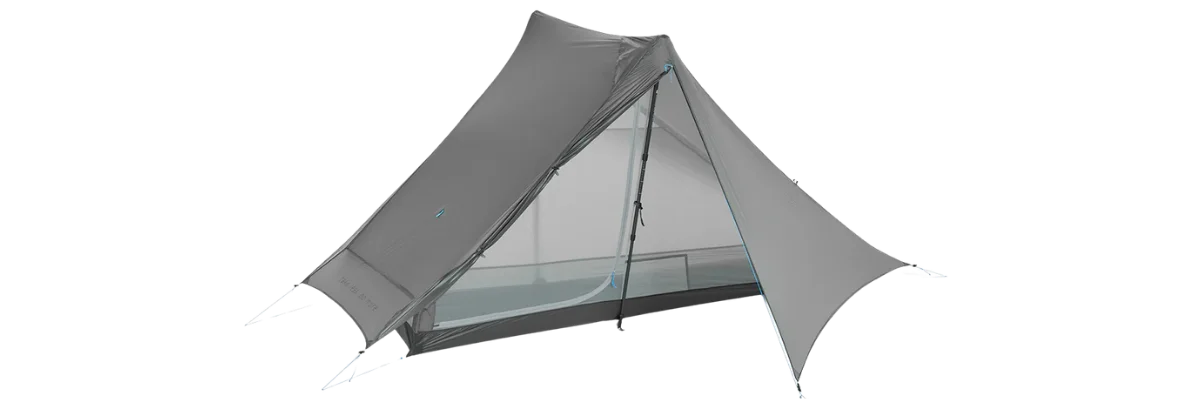
Specs at a Glance: The One
| Spec | Detail |
|---|---|
| Price (USD) | $315 |
| Trail Weight | 19.68 oz / 558 g |
| Packed Weight | 22.24 oz / 630.4 g (shelter, stakes, stuff sack, guylines, clothesline) |
| Capacity | 1 person |
| Floor Dimensions | 84 in x 33 in (head) / 21 in (foot) — 213.4 cm x 83.8 cm / 53.3 cm |
| Peak Height | 49 in / 124.5 cm |
| Packed Size | 12 in H x 5 in W x 5 in D / 30.5 x 12.7 x 12.7 cm |
| Shelter Type | Single-wall, non-freestanding, A-frame trekking pole tent |
| Shelter Material | ClearSkies 15D Recycled Robic with 20D dope-dyed ripstop grid, SIL/PU coating, 4,923 mm HH, PFAS-free |
| Canopy Weight (oz/sqyd) | Not specified |
| Floor Weight (oz/sqyd) | Not specified |
| Number of Doors | 1 |
| Number of Vestibules | 1 |
| Wall Construction | Single-wall A-frame, catenary cut, sewn-in bathtub floor, factory-taped seams |
| Season Rating | 3-season |
| Trekking Poles Required | Yes, two poles or dedicated pole set at a recommended height of 125 cm (about 49 in) |
| Warranty | 1 year against manufacturing defects; does not cover fabric or durability wear |
| Lead Time | Not specified (listed as backordered with a “notify me” option at the time of writing) |
Gossamer Gear The One Design and Build Quality
The One is built from Gossamer Gear’s new ClearSkies fabric, a 15D recycled Robic nylon with a 20D dope-dyed ripstop grid and a SIL/PU coating rated at 4,923 mm of hydrostatic head. That’s a genuine step up from the previous generation. Gossamer Gear says it’s 35 percent stronger in tensile strength and 2.35 times more water resistant than the old material, while holding the same weight class. The seams come factory taped, so there’s no aftermarket seam-sealing chore before your first trip, which is a real convenience compared to shelters that ship needing that step.
Hardware is where you can feel the premium price at work even though this isn’t a premium-tier shelter. The fly door runs a water-repellent YKK #3 AquaGuard zipper with a PU-laminated coil, while the main body door uses a standard YKK #3 coil. Reflective zipper pulls and reflective, color-coded guylines make midnight fumbling less of a headache. A new Fritsch Hitch guyline system is meant to simplify pitching and maximize the usable floor space inside the bathtub floor. Reinforced tie-out patches back up the stress points, and snug loops secure the tent walls to your trekking poles to cut down on wind flutter. The included hardware is minimal but functional: six aluminum stakes, two static guylines, and a clothesline, nothing fancy, but nothing missing either. The build quality is clean and considered, even if the fabric itself is thin enough that you’ll want to treat it with some care.
Setup and Pitch of the The One
This is where The One earns its reputation. At 84 inches long with a 49 inch peak height, it has real room to sit up, stretch out, and change clothes without your head brushing the ceiling. The floor tapers from 33 inches wide at the head end to 21 inches at the foot, a shape that works fine for a single sleeping pad but means you shouldn’t expect much room to spread out gear beside you at the foot end. Tall sleepers up to roughly 6 feet should fit comfortably, and Gossamer Gear notes the 49 inch peak height accommodates the average seated height of someone around 6’2″, though anyone near that mark should measure their own torso length before counting on it.
There’s a single door and a single vestibule, which is the biggest livability tradeoff compared to dual-door competitors. The vestibule has enough room for a pack and boots, but not for a second person’s gear or a lot of cooking space in a downpour. Inside, you get one mesh pocket for small essentials and the built-in clothesline for drying socks or hanging a headlamp. Side sleepers generally do fine given the width at the head end, but this is very much a solo shelter. Two-person fit isn’t realistic here, this is a dedicated one-person design, and trying to squeeze a partner or a large dog in will feel cramped fast.
Weather Performance of the Gossamer Gear The One
The One pitches with two trekking poles (or Gossamer Gear’s optional dedicated pole set) set to a recommended height of 125 cm, roughly 49 inches, which matches the tent’s peak height. That’s a genuine learning curve if you’ve never pitched a two-pole trekking tent before: expect a few practice runs in the yard before your first backcountry night. Once you know the sequence, most reviewers report setup in the five-to-ten-minute range, longer than a freestanding pole tent but comparable to other trekking-pole shelters in this class.
You’ll use all six included aluminum stakes at minimum, with additional tie-out points available if you want a tighter, stormier pitch. The nylon fabric does have some stretch, unlike Dyneema, which means a taut pitch at dusk can sag slightly overnight as the material relaxes with dew and temperature changes; a quick retension in the morning is normal maintenance, not a defect.
The tent is reasonably forgiving on uneven ground since the pitch is adjustable, but non-freestanding trekking pole shelters in general demand a flatter, more obstacle-free site than a freestanding dome. Beginners should plan on a slower first pitch and shouldn’t expect to nail it site-unseen on night one.
Gossamer Gear The One Value and Comparisons
Gossamer Gear’s ClearSkies fabric delivers 4,923 mm of hydrostatic head, which the company points out is close to the roughly 5,000 mm threshold associated with heavy-duty mountaineering shelters and above the average rating for a typical three-season tent.
Combined with factory-taped seams and reinforced tie-out patches, it should shed sustained rain without issue in normal three-season conditions. As a single-wall design, though, condensation is unavoidable on cold, still nights, this is true of essentially every silnylon single-wall trekking pole tent, not a unique flaw of The One. Gossamer Gear addresses it with retractable corner vents you can open for airflow on calm nights or seal with velcro stays when the weather turns nasty.
Independent testers have generally found the tall, angled walls help deflect wind reasonably well for a shelter this light, with reports of it holding steady through gusts in the 20 to 30 mph range when pitched properly with an end facing into the wind. That said, the tall profile and single-door design mean site selection matters more here than with lower-profile shelters; an exposed ridge in a real storm is not where you want to test this tent’s limits. The bathtub floor keeps splashback and ground moisture out during normal rain, and the vent system gives you a reasonable amount of control over the condensation-versus-warmth tradeoff on any given night.
The One Value and Comparisons
At $315, The One sits in an interesting spot: heavier and less weather-tight than the priciest Dyneema shelters, but noticeably cheaper. The clearest comparison is Durston’s X-Mid Pro 1, which runs $599 and weighs 15.5 to 17.1 ounces depending on floor material. The X-Mid Pro 1 is more spacious (a 32 inch floor width versus The One’s tapered 21 to 33 inches), has dual doors and dual vestibules, and uses genuinely stormworthy Dyneema fabric. If your budget stretches that far and you want the best all-around performance for long-distance thru-hiking, the X-Mid Pro 1 is the better shelter on nearly every technical spec. But you’re paying almost twice as much for those gains, and The One’s single-door simplicity is lighter on the wallet and, for some hikers, easier to live with logistically.
At the other end, the Six Moon Designs Lunar Solo costs $260, weighs 26 ounces, and pitches with a single trekking pole rather than two. It’s roomier on paper (a 90 by 48 inch hexagonal floor versus The One’s 84 by 33/21 inch rectangle) and cheaper, but it’s also heavier, and its seams don’t come factory sealed, you’ll need to seal them yourself or pay Six Moon Designs to do it before your first trip. If minimizing pitch complexity and upfront cost matters more than shaving ounces, the Lunar Solo is worth a look. If weight is the priority and you already carry two trekking poles, The One pulls ahead.
Who should buy The One: thru-hikers and weekend backpackers who already use two trekking poles, want real sit-up headroom in a sub-20-ounce package, and don’t want to spend Dyneema money. Who should look elsewhere: hikers who only carry one trekking pole, anyone who wants dual doors and vestibules for gear organization, or buyers who need bombproof, above-treeline storm performance and can afford to pay for it.
The One by Gossamer Gear FAQ
Does the Gossamer Gear The One require trekking poles?
Yes, it needs two trekking poles or Gossamer Gear’s optional dedicated pole set, set to a recommended height of about 125 cm (roughly 49 inches). No poles are included in the base price.
How well does The One handle rain and wind?
The ClearSkies fabric is rated at 4,923 mm of hydrostatic head with factory-taped seams, which is well above average for a three-season tent. Wind performance is solid for the weight class when pitched with an end into the wind, though its tall single-door profile means careful site selection matters more than with lower shelters.
Is setup difficult for beginners?
There’s a real learning curve the first few times, since it’s a two-pole, non-freestanding pitch. Most people get comfortable after a couple of practice runs, and setup typically takes five to ten minutes once you know the sequence.
What season is the Gossamer Gear The One rated for?
It’s a three-season shelter, suited to spring, summer, and fall backpacking. It isn’t designed or marketed as a four-season or winter mountaineering tent.
Is the weight tradeoff worth it compared to heavier tents?
At 19.68 ounces trail weight, it’s meaningfully lighter than budget silnylon and silpoly competitors like the Lunar Solo, while costing far less than Dyneema options like the X-Mid Pro 1. For hikers prioritizing pack weight without a huge price jump, it’s a reasonable middle ground.
Does the single-wall design cause a lot of condensation?
Some condensation is normal for any single-wall shelter on cold, calm nights. The retractable corner vents help manage it, but you should expect occasional damp mornings, especially in humid or low-lying campsites.
Will The One fit a tall person?
The 49 inch peak height and 84 inch floor length work well for hikers up to around 6 feet. Gossamer Gear notes the peak height accommodates the average seated height of someone about 6’2″, but taller hikers should measure their own proportions before relying on that.