

StratoSpire 2 Li Quick Take
The StratoSpire 2 Li is built for the hiker who wants Dyneema weight savings without giving up real living space or storm protection. Its standout strength is the combination of two huge vestibules and a genuinely stable hexagonal pitch, which makes it feel less like an ultralight compromise and more like a basecamp you can wait out a storm in. The tradeoff is footprint: those lovely vestibules and the offset, diagonal geometry mean you need a sizable, reasonably flat patch of ground, and the pitch takes more practice than a simple rectangular tent. If you camp above treeline, in shoulder seasons, or anywhere weather turns nasty, this is one of the most protective two-person DCF shelters you can buy.
Pros
- Two large, deep vestibules with room to cook and stash wet gear
- Excellent wind and rain performance from the symmetrical six-stake design
- Double-wall construction reduces condensation contact and adds versatility
- Fly, interior, or both can pitch independently
Cons
- Large footprint makes campsite selection harder
- Pitch has a real learning curve and is orientation-sensitive
- Supplied guylines run short for rocky or snowy ground
- Premium price, and the floor is nylon rather than DCF
Bottom line: A 4-season, 2-person double-wall DCF shelter at roughly 29.7 oz / 842 g trail weight, priced from $679, that trades a big footprint for class-leading storm protection and livability.

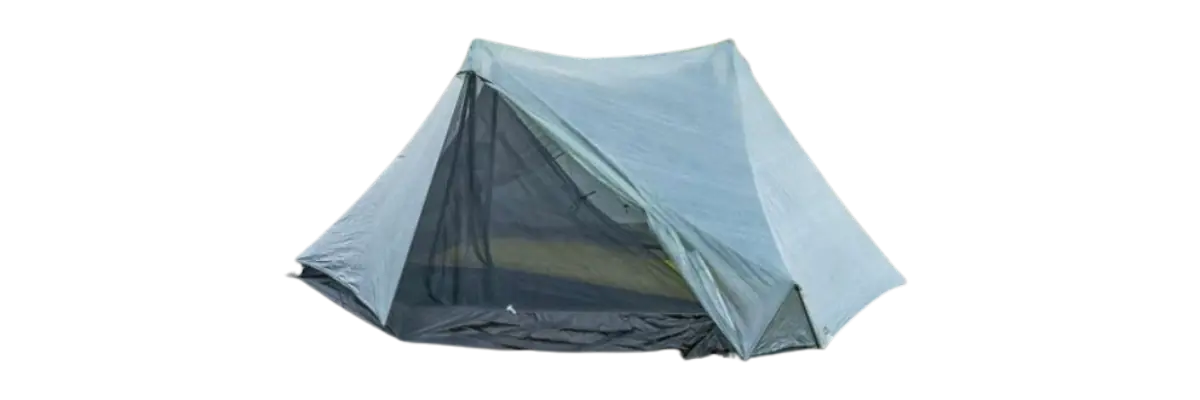
Specs at a Glance: StratoSpire 2 Li
| Spec | Detail |
|---|---|
| Price (USD) | $679 to $749 depending on interior choice |
| Trail Weight | 842 g / 29.7 oz (wide interior, no bags, stakes, or apex guylines) |
| Packed Weight | 951 g / 33.55 oz (typical, with stakes, bags, struts, wide interior, apex guylines) |
| Capacity | 2 |
| Floor Dimensions | Wide: 86 x 52 in / 218 x 132 cm; Narrow: 86 x 45 in / 218 x 114 cm |
| Peak Height | 44 in / 111 cm |
| Packed Size | 16 x 5 x 5 in / 41 x 13 x 13 cm |
| Shelter Type | Non-freestanding, double-wall, trekking-pole tent |
| DCF Canopy Weight | 0.55 oz/sqyd (CT1E.08) |
| DCF Floor Weight | Not applicable, floor is 15D (wide) or 20D (narrow) coated nylon, not DCF |
| Number of Doors | 2 |
| Number of Vestibules | 2 |
| Wall Construction | Double wall (mesh or full solid interior options) |
| Season Rating | 4-season (handles moderate snow, not extreme loading) |
| Trekking Poles Required | Yes, ~48 in / 122 cm, or substitute poles available |
| Warranty | Lifetime against defects in materials and craftsmanship (original purchaser) |
| Lead Time | Not specified |
A note on weights: Tarptent publishes a “typical” figure (951 g) and a “minimum” figure (842 g). Most weight tables call the lighter, stuff-sack-free number “trail weight,” which is how it is listed above.
Tarptent StratoSpire 2 Li Design and Build Quality
The fly is 0.55 oz/sqyd Dyneema Composite Fabric (CT1E.08), USA-made and rated to over 8,000 mm hydrostatic head, so it is fully waterproof and factory seam-taped with no sealing required. That is the headline material, but the structure is where Tarptent earns its keep. The tent uses an offset ridgeline supported by two trekking poles, plus the patented PitchLoc strut-supported corners: four 16 in / 41 cm pultruded carbon fiber struts that tension the ends, add interior volume, and create adjustable low vents. The result is a hexagonal footprint with small panels and balanced tension lines, which is what gives the shelter its stability.
Hardware is genuinely premium. You get dual-pull YKK #5 Aquaguard waterproof zippers, which are noticeably beefier than the #3 zippers on many DCF rivals, plus DAC aluminum J-stakes, UHMWPE-core reflective cord, and magnetic fly-door ties. Large reinforcement radials at the stress points address a known DCF weak spot, since the fabric tends to fail at anchor points before the panels do.
One honest caveat on the value question: unlike the Zpacks Duplex or some Durston configurations, the StratoSpire 2 Li floor is coated nylon, not Dyneema. That is arguably more puncture-tolerant and cheaper to replace, but it means you are not paying for an all-DCF tent.
Setup and Pitch of the StratoSpire 2 Li
This is where the StratoSpire shines. The wide interior measures 86 x 52 in / 218 x 132 cm, enough for two 26 in / 66 cm wide pads side by side, and the narrow version still fits two full-length pads (one standard, one wide). The 44 in / 111 cm peak height is tall for this category and lets two people sit up at the same time, change clothes, and organize gear without stooping.
Tall sleepers are well served: Tarptent rates the tent for users up to 6 ft 4 in / 1.93 m, and the 86 in length backs that up. Side sleepers benefit from the near-vertical strut-supported ends, which keep the canopy off your feet and head as pads inevitably slide.
The real luxury is storage. Each side has a 12.1 sq ft vestibule, 24.2 sq ft total, deep enough to cook under cover or wait out a storm with your pack beside you. Because the offset poles sit away from the door, entry and exit are not blocked, a recurring complaint with many trekking-pole tents. Inside you get dual overhead pockets and door pockets. Several owners wish the pockets were larger, which is a fair, minor gripe.
Weather Performance of the Tarptent StratoSpire 2 Li
Be honest with yourself here: this is not a beginner-friendly pitch on night one. The offset, diagonal geometry means the interior only lands where it should if you orient the tent correctly, and more than one long-term owner admits it took several tries to stop guessing which end was the head. Once it clicks, experienced users report a two to three minute pitch, and Tarptent designed it as a six-stake, fly-first setup.
The basic sequence: stake the four corners with a little slack, set your trekking poles to roughly 48 in / 122 cm (some users prefer 49 to 51 in / 125 to 130 cm), slide each pole tip into the top vent grommets, then tension the pre-attached apex guylines and adjust the corners until everything is taut and wrinkle-free. Practice in the yard before you trust it in a storm.
Two things to plan around. First, the supplied guylines are short, which several owners flag as a problem on rocky or snowy ground where you want to stake out wide or tie to rocks; longer cord is a cheap, common upgrade. Second, DCF does not stretch, which is a real advantage: unlike silnylon, the pitch you set at dusk stays drum-tight through a wet night, with no midnight re-tensioning. On uneven ground the strut-supported corners help the structure hold its shape, but you still need four solid stakes to keep it standing.
Tarptent StratoSpire 2 Li Value and Comparisons
Storm protection is the reason to buy this tent. The hexagonal footprint, small panel sizes, and balanced tension lines shed wind from any direction, and because the design is symmetrical you do not have to agonize over orientation when the weather turns. Field reports are convincing: owners describe riding out near 30 mph winds on the Collegiate Loop, Patagonian storms, and high winds in Norway and the Colorado high country. The one consistent wind-related note is that the stock guylines are short, so in truly exposed terrain people add longer cord and weight the stakes with rocks.
Rain performance is excellent. The DCF fly is fully waterproof and seam-taped, and multiple owners report sleeping dry while streams of water ran under the floor. The low fly edge blocks splash, and the interior stays protected from overhead rain even with the fly doors open.
On condensation, the double-wall design is a meaningful advantage over single-wall DCF rivals: any moisture that forms on the fly is separated from you by the inner. Combine that with the adjustable high vents at the poles, the low PitchLoc vents, and roll-back vestibules, and ventilation is genuinely good for a fully enclosed shelter. For snow, treat it as moderate-duty: steep walls shed snow well, but Tarptent itself cautions the StratoSpire is not built for heavy, wet snow loading.
StratoSpire 2 Li Value and Comparisons
At $679 and up, the StratoSpire 2 Li sits in the same price tier as the genre’s icons, so the question is not whether it is expensive (all DCF tents are) but which tradeoff fits your hiking.
Versus the Zpacks Duplex (about $699, roughly 18.5 oz): The Duplex is the lighter, simpler, more compact choice. Its rectangular footprint slots into tight backcountry spots the StratoSpire cannot, and its A-frame pitch is far easier to learn. But it is single-wall, so you manage condensation more actively, and its vestibules and storm coverage are less generous. Choose the Duplex if you prioritize minimum weight, packed size, and easy site selection; choose the StratoSpire if you want double-wall comfort, bigger vestibules, and a more bombproof feel in sustained weather.
Versus the Durston X-Mid Pro 2 (about $639 to $679, roughly 17.9 oz trail): The X-Mid Pro 2 is the value-and-simplicity champion of the group, with a famously intuitive four-stake pitch, fully bonded seams (no sewn anchor points to fail), and mid-panel zippers that dodge a known StratoSpire wear point. It is also several ounces lighter. The StratoSpire counters with double-wall construction, larger vestibules, and a structure many alpine campers trust more in wind. Choose the X-Mid Pro 2 if you want the easiest pitch and the lowest weight; choose the StratoSpire if double-wall versatility and vestibule volume matter more than saving a few ounces.
Who should buy the StratoSpire 2 Li: shoulder-season and alpine hikers, couples who actually share the tent and want room to ride out storms, and anyone who values condensation control and cooking-under-cover space enough to accept a larger footprint and a steeper learning curve. Pure gram-counters and beginners who want a foolproof pitch will likely be happier with the Duplex or X-Mid Pro 2.
StratoSpire 2 Li by Tarptent FAQ
Is the Tarptent StratoSpire 2 Li good in heavy rain and wind?
Yes, this is one of its strongest areas. The waterproof, seam-taped DCF fly and symmetrical hexagonal design shed rain and wind from any direction, and owners report staying dry through storms with water running under the floor. In very exposed spots, add longer guylines and weight your stakes with rocks.
Is the StratoSpire 2 Li hard to set up?
It has a real learning curve. The offset, diagonal geometry is orientation-sensitive, so expect a few practice pitches before it feels fast. Once you know the sequence, it goes up in two to three minutes with six stakes and two trekking poles.
What length trekking poles do I need?
Tarptent recommends about 48 in / 122 cm, though some users run 49 to 51 in / 125 to 130 cm. If you do not hike with poles, Tarptent sells substitute vertical poles separately.
Is this a true 4-season tent?
It is rated 4-season and handles moderate snow thanks to its steep, snow-shedding walls, and the solid interior helps in cold wind. It is not built for heavy, wet snow loading, so it is best understood as a strong 3-season tent that can handle shoulder-season snow.
Does the StratoSpire 2 Li need a big campsite?
Yes. The two large vestibules and the diagonal footprint mean it takes up more ground than a compact rectangular tent like the Duplex. This is the most common owner complaint, so plan your sites accordingly.
How does it handle condensation?
Better than single-wall DCF tents. The double-wall design separates fly moisture from you, and the adjustable high and low vents plus roll-back vestibules move a lot of air. You will still see condensation in cold, damp, still conditions, so pick breezy, elevated sites when you can.
Does the StratoSpire 2 Li fit two people and tall sleepers?
Yes. The wide interior fits two wide pads side by side, and the tent is rated for users up to 6 ft 4 in / 1.93 m. The 44 in peak lets two people sit up at once, and the strut-supported ends keep the canopy off your head and feet.